ƏC

Biography

Early Years & Education

Əhmədiyyə (Ahmadiyya) Jabrayilov was born on 22 September 1920 in the village of Oxud, in the Şəki (then Nukha) district of Azerbaijan. His childhood and early youth were spent among the landscapes and people of his native village — years that laid the foundation for a resilience he would never lose, even in the harshest trials of his life.

The simple rural life, family upbringing, and hard work typical of Azerbaijani villages of that era played an important role in shaping his character. The mountainous, forested terrain of the Şəki region, and the endurance of the people who lived there, would later serve him well — in the mountains and forests of a distant France, during the struggle he would one day wage there.

By the late 1930s, Azerbaijan, like the rest of the Soviet Union, was preparing for military mobilization. Like his peers, young Ahmadiyya grew up under the lengthening shadow of the approaching war.
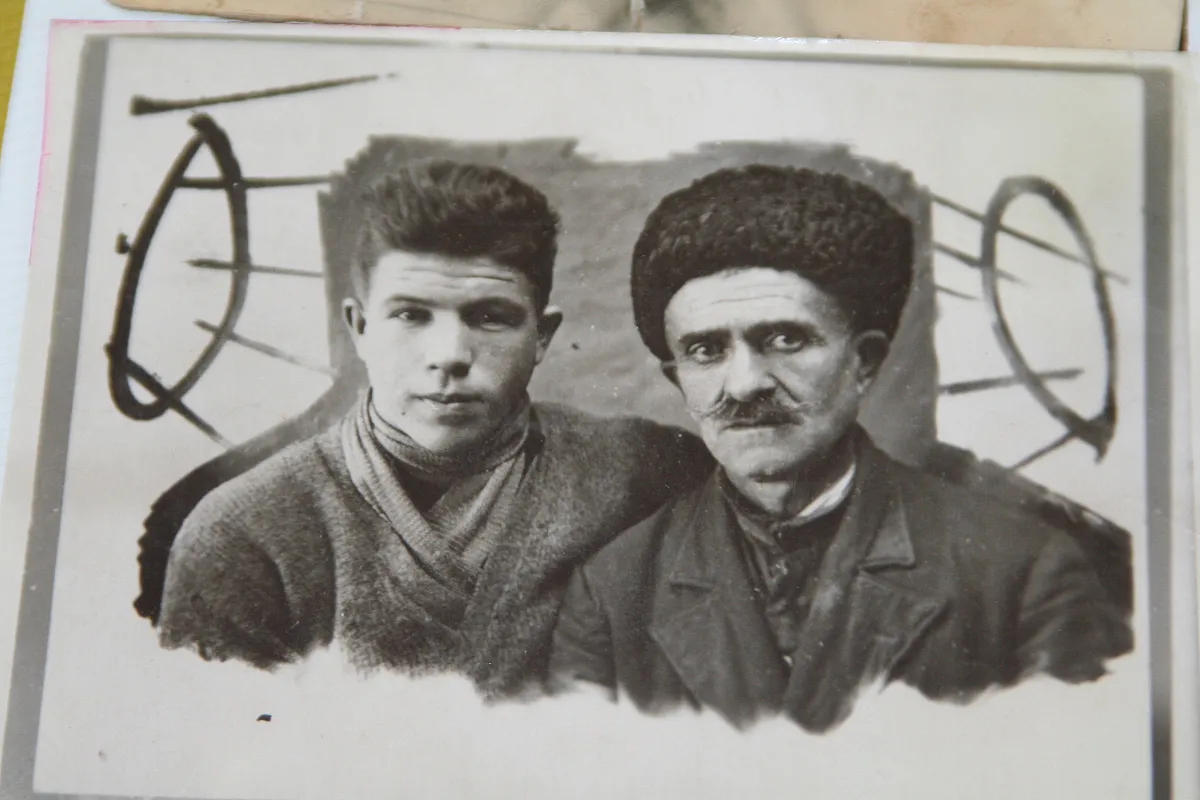
Portrait of Ahmadiyya Jabrayilov before World War II
Source: Wikimedia Commons (Ahmadiyya_Jabrayilov_before_World_War_II.jpg) — CC BY-SA 4.0 / PD-France. Archive of Javanshir Jabrayilov / House-Museum of Ahmadiyya Jabrayilov, Şəki.

War

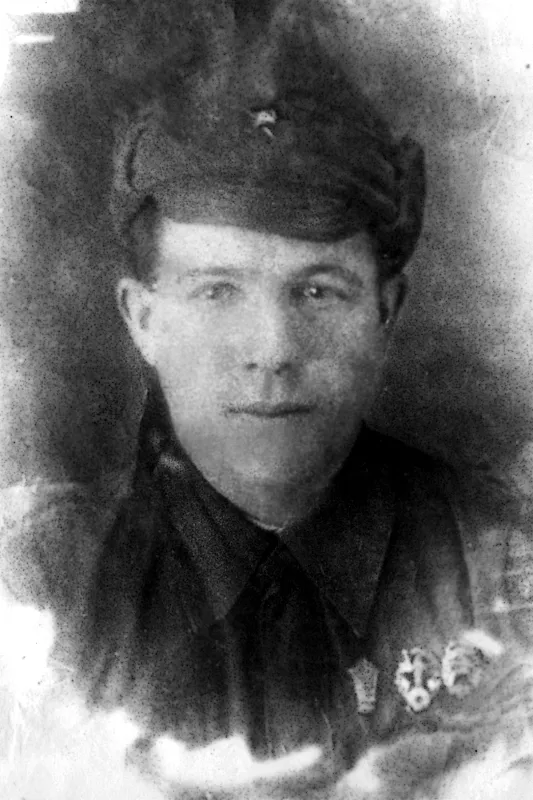
When the Second World War began, Ahmadiyya Jabrayilov, like thousands of other Azerbaijanis, was called up into the Red Army. He fought at the front as an ordinary Soviet soldier, present in the early stages of his combat path on the battlefields of Eastern Europe.

During the war's hardest years, like thousands of other soldiers, Ahmadiyya witnessed fierce fighting, retreats, and deprivation. Although the full details of this period are not fully documented, his subsequent fate — capture, and later joining the Resistance in France — clearly reflects the marks these years left upon him.

The endurance and resolve he showed during his service at the front would soon be needed again, in an entirely different country, in an entirely different struggle.

Ahmadiyya Jabrayilov in the Red Army
Source: Wikimedia Commons (Ahmadiyya_Jabrayilov_in_Red_Army.jpg) — PD-Russia-1996. Archive of Javanshir Jabrayilov / House-Museum of Ahmadiyya Jabrayilov, Şəki.

Captivity

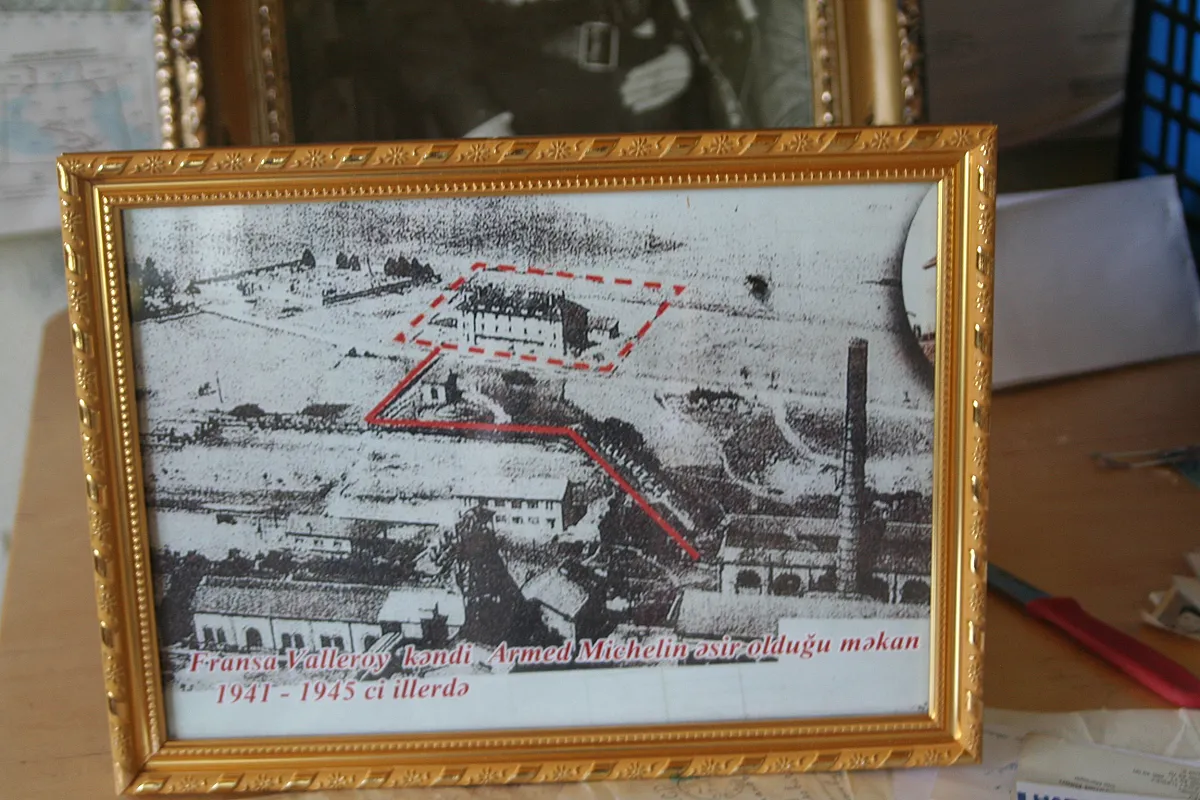
In the course of the fighting, Ahmadiyya Jabrayilov was taken prisoner by German forces. Like thousands of other Soviet prisoners of war, he was held under harsh and dangerous conditions, subjected to the severe regime of the POW camps.

The time he spent in captivity was one of the hardest trials of his life. Yet it was precisely this ordeal that strengthened his resolve to regain his freedom, and it marked the beginning of the path that would lead him to escape and join the French Resistance.

The exact details of his escape from captivity, like those of thousands of similar fates from that era, are not fully documented. But the outcome is unambiguous: Ahmadiyya broke free from captivity and joined the ranks of Resistance fighters in the south of France.

Photo of the Valleroy camp displayed in the house-museum
Source: Wikimedia Commons (Photo_of_Valleroy_concentration_camp_in_House-museum_of_Ahmadiyya_Jabrayilov.JPG) — CC BY-SA 4.0 / PD-France. Archive of Javanshir Jabrayilov / House-Museum of Ahmadiyya Jabrayilov, Şəki.

The Resistance

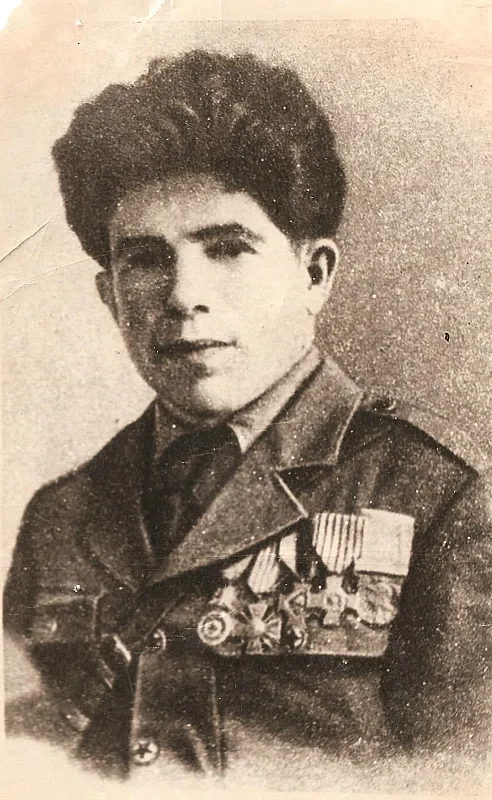
After escaping captivity, Ahmadiyya Jabrayilov joined the French Resistance (Maquis) operating in the Tarn-et-Garonne department. He fought within the Maquis de Cabertat, in the Delplanque detachment.

Among his French comrades he became known by the noms de guerre "Armed Michel" (sometimes written "Ahmed Michel"), "Ryus Armed", and "Kharko". At the time, thousands of foreigners in France — including soldiers who had escaped Soviet captivity — joined local Resistance units, often having to conceal their true identities; the nickname "Ryus" ("the Russian") was, in this context, a generalized name given to fighters from the Soviet Union regardless of their actual nationality.

Within the Maquis de Cabertat, Ahmadiyya fought shoulder to shoulder with his French comrades, sharing the dangers of the clandestine war against the occupying forces. His sacrifice, and that of his fellow maquisards, contributed to France's eventual liberation.

For his courage during these years, Ahmadiyya Jabrayilov was decorated with French military honors.

As "Ahmed Michel" during the French Resistance
Source: Wikimedia Commons (Photo_of_Akmed_Michel_during_Resistance.jpg) — PD-France. Archive of Javanshir Jabrayilov / House-Museum of Ahmadiyya Jabrayilov, Şəki.

Return Home

After the war ended, Ahmadiyya Jabrayilov returned to his native Azerbaijan. Having fought far away in France for the freedom of a people not his own, he now returned to his own village, among his own people.

Coming home was, for him, both a moment of joy and a period of adjustment to a new life. Continuing to carry the heavy burden of the years of war and captivity, Ahmadiyya chose the path of a quiet life — building a family and devoting himself to daily work.

His extraordinary journey — from Şəki to the mountains of France, and back again to Şəki — remained, for many years, largely unknown to the wider public, though it lived on among his family and those close to him.

Later Years

Over the following decades, Ahmadiyya Jabrayilov lived in Şəki and raised his family. His son, Mikayıl Jabrayilov, carried forward his father's resolve and was later posthumously honored as a National Hero of Azerbaijan.

In 1990, the death of his son Mikayıl in the Karabakh war was a heavy loss for Ahmadiyya — the tragedy of a father, himself a survivor of one war, losing his son to another.

Despite this profound loss, Ahmadiyya Jabrayilov continued to live in Şəki for the rest of his life, sharing his life story with those close to him.

Death & Legacy

Ahmadiyya Jabrayilov passed away on 11 October 1994 in Şəki. His life's journey — from a village in Şəki to the Red Army, from captivity to the French Resistance, and back again to his native land — is a story of resilience and courage set against the backdrop of some of the 20th century's most dramatic events.

His memory has been honored in both France and Azerbaijan. In 2016, a memorial plaque was unveiled at Cabertat, formally commemorating his sacrifice and that of his fellow fighters for the liberation of France. In Azerbaijan, a monument was erected in his native village of Oxud, a house-museum was established in Şəki, state-level events marked the centenary of his birth in 2020, and a postage stamp was issued in his honor.

Ahmadiyya Jabrayilov's life story continues to be told today as a symbol of the shared history and friendship between two peoples — Azerbaijan and France.